WHOLE-NATURE
A new earth
"Then I saw a new heaven and a new earth." — Revelation 21:1
What if the "new earth" isn't somewhere else — but what's discovered when we include the whole of ourselves in how we meet the living world?
We tend to think of nature as something "out there" — landscapes to protect, ecosystems to restore, a planet to save. And all of that matters. But whole-nature begins with a deeper recognition: we are not separate from nature. Our physicality, our senses, our breath, our very being IS nature. We are earth, becoming conscious of itself.
When essence is included in the picture — when we bring awareness, presence, and our full sensory aliveness to how we meet the living world — something shifts. Nature is no longer just a backdrop to our lives or a resource to manage. It becomes a communion. A living, breathing, intelligent field that we are participating in at every moment.
This is what Eckhart Tolle pointed to when he wrote that "a new heaven and a new earth are arising within you at this moment." The new heaven is the awakened consciousness. The new earth is what the world becomes when we meet it from that consciousness. Not a future paradise — but the present moment, experienced in its fullness.
Not transcendence — inscendence
For centuries, spiritual traditions have often pointed upward — toward transcendence, toward rising above the material world to find the sacred. And there is truth in that movement.
But whole-nature moves in another direction. Not up and out of the world, but deeper into it. Bill Plotkin called this "inscendence" — the impulse not to rise above the world but to climb into it, to seek its core. Robert Macfarlane described it simply as the movement deeper into the world rather than away from it.
This is what I discovered walking in my valley. Essence didn't arrive from somewhere above. It was already here — in the spaciousness of the blue sky, in the aliveness of the roadside flowers, in the warmth of morning light on skin. I didn't transcend nature to find my essential nature. I went deeper into it, with all my senses open, and found that essence was already there — meeting me in everything.
The earth is our origin, our nourishment, our educator, our healer. At its core, even our spirituality is earth-derived. We don't need to leave the world to find what is most real. We need to arrive more fully in it.
Fresh communion
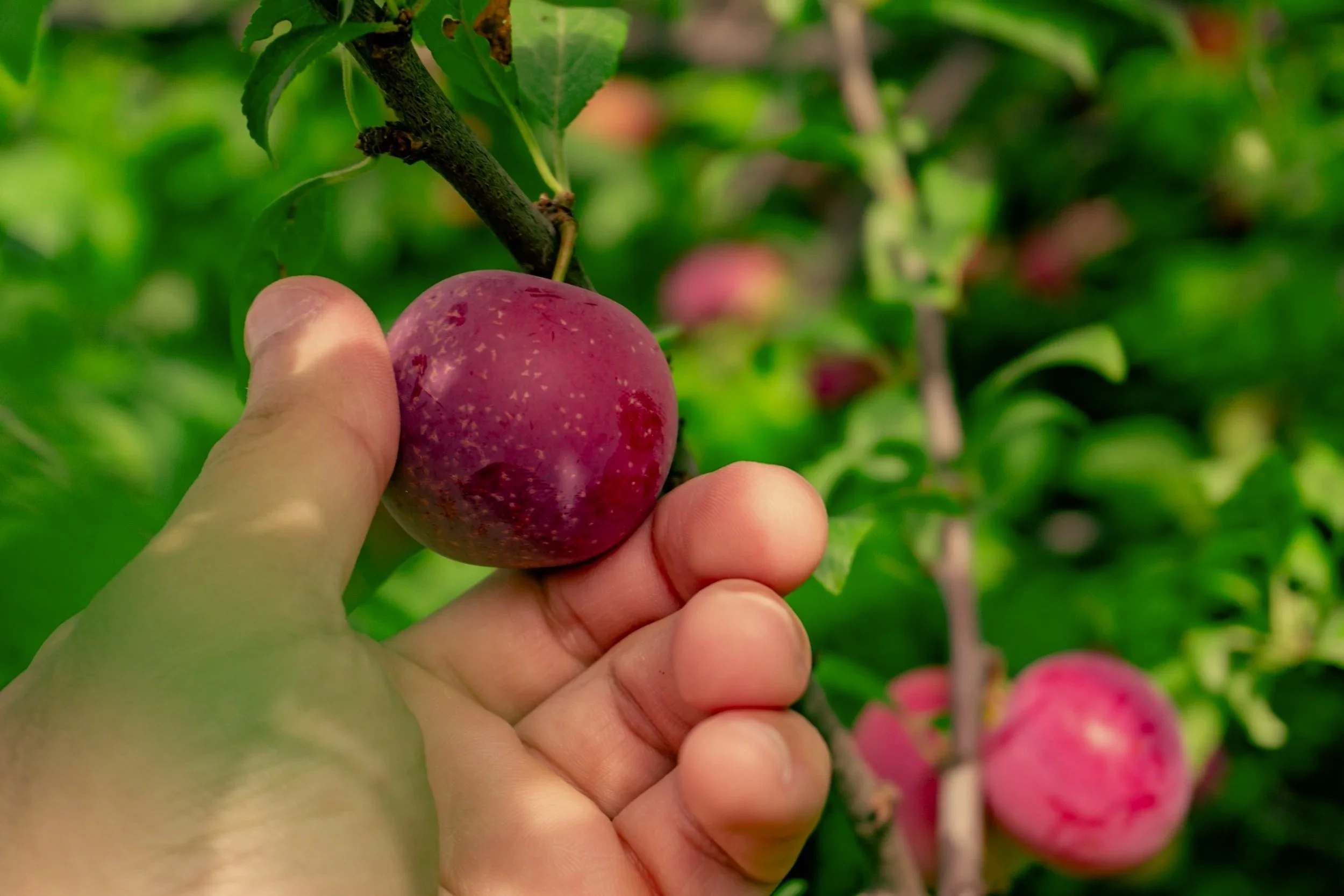
One summer morning I was sitting under the plum tree in the warm early light. Before picking a plum I paused to appreciate the beauty all around, with all of my senses. I found a plum that was a perfectly ripe shade — the colour of deep red wine. With only a light touch it fell into my cupped hand.
As I took in its glorious perfume, everything stood still. The depth of the plum's sweet scent resonated throughout my whole body, with all its layers and notes. When I bit into the sour-skinned and sweet-fleshed plum, its juices streaming onto my face and hands, I allowed the flavours to resonate all the way to my toes.
And then something opened. I had an innate knowing that the plum wanted to die to itself to merge with me — and become a part of my body, contributing to more experiences like this. I saw how this cycle of generosity, dying, merging, receiving, and transformation applied to all of nature. I was not separate from this ecosystem. I was participating in it — as it was participating in me.
I recognised this as being very much like holy communion, and dubbed it my "fresh communion."
A new way of being opened up in me. I saw how futile my being greedy was — everything was an aspect of this vast, generous ecosystem. Nature was a gift that kept giving. As was essence. And as was I — when I stopped obstructing the flow.
The universe is a communion of subjects
Thomas Berry, the Catholic priest and cultural historian often called the father of ecological spirituality, wrote that "the universe is a communion of subjects, not a collection of objects."
This single sentence captures the shift that whole-nature makes possible. When we meet the living world from essence — not just conceptually but through direct sensory experience — the boundary between "me" and "nature" dissolves. Not because we think our way into interconnectedness, but because we directly recognise the aliveness in ourselves as the same aliveness in the soil, the creek, the web of mycelium beneath our feet.
This isn't a concept. It's something you can taste, feel, and know in your body. The spaciousness in your own awareness is the spaciousness of the open sky. The warmth you feel in your chest is the warmth of the sun on the earth. The stillness you touch in presence is the same stillness at the heart of a forest.
When someone lives from this recognition, they don't need to be convinced to care about the living world. They already are the whole, caring for itself. Ecological alignment becomes not a moral imperative but the natural expression of recognising wholeness.
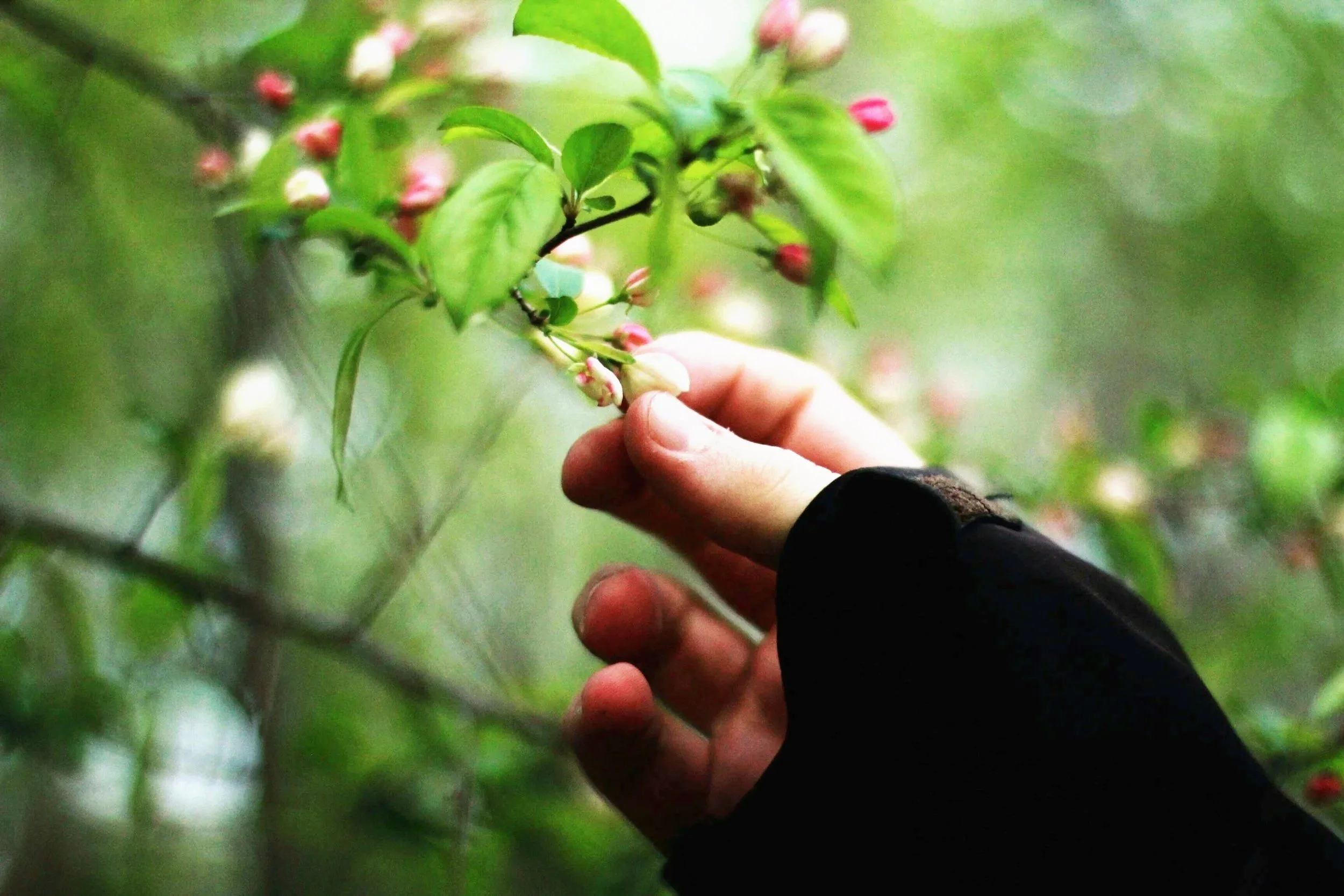
A different kind of nature connection
There are many beautiful approaches to nature connection — forest bathing, rewilding, outdoor education, regenerative land practices. These are all valuable, and whole-nature doesn't replace any of them.
What whole-nature offers is something that can deepen all of them if that depth is not already there: the recognition that our entire sensory experience, essence included, IS nature, a deeper nature. That the present moment — with all its sounds, textures, temperatures, fragrances, light, and the quality of awareness meeting it all — is itself a living ecology.
This moves beyond caring about nature from a distance. It moves beyond even loving nature as something beautiful and worthy of protection. It arrives at something more intimate: I am this. This is me. We are one living expression.
From here, the way you tend a garden changes. The way you walk through a landscape changes. The way you eat, breathe, and inhabit your body changes. Not through effort or guilt, but because you are no longer separate from what you are tending. You are the earth, tending itself. And conscious of this.
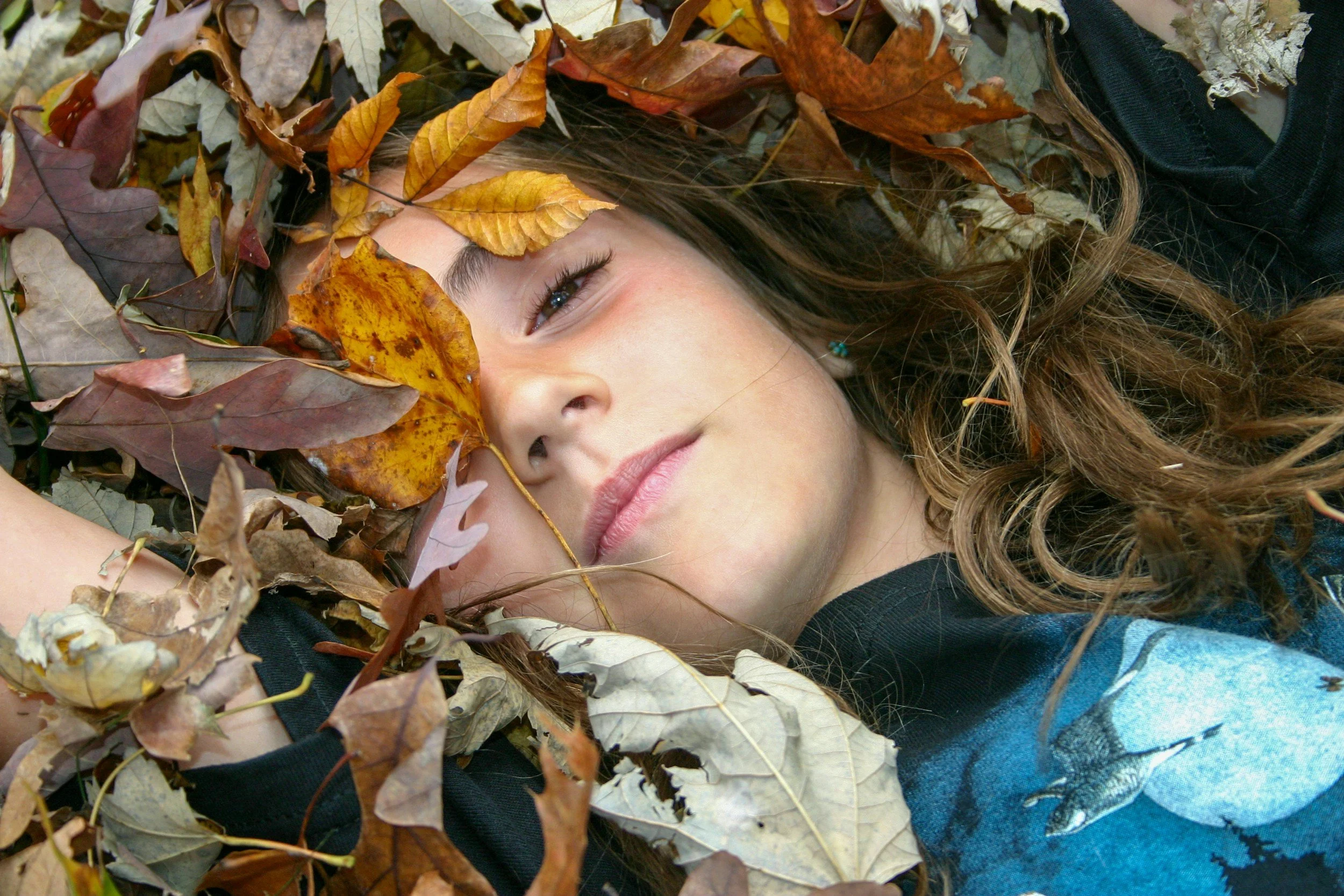
"We are the universe looking back on itself."
What becomes possible
When essence meets the living world — when nature is lived in its wholeness — something begins to shift, not just in how you relate to the natural world but in how you live altogether.
You might notice a natural impulse toward simplicity — toward what is fresh, real, and uncluttered. A deeper respect for cycles — growth and rest, fullness and emptiness, fruiting and composting. An instinct for what regenerates rather than what extracts. A quality of participation rather than consumption.
This recognition is particularly alive for those already working in regenerative movements — agriculture, ecology, land stewardship — who sense that technical practices alone aren't enough. The transformation of our relationship with earth ultimately asks for a transformation of consciousness itself. Not as a luxury, but as the root from which genuine regeneration grows.
Explore The Living World — essence and the regenerative movement:
The invitation
If this speaks to something you already sense — that your relationship with the living world is ready to deepen, that there is more to nature connection than you've yet discovered, that the earth itself might be your greatest teacher — I'd love to explore what might serve.
This may resonate especially if you walk in nature and sense something more is being offered than exercise or beauty. Or if you work with the land and feel the pull toward a deeper relationship with it. Or if you've always known, in a quiet, embodied way, that you and the earth are not two separate things.