PRACTITIONER COMPANIONSHIP

For Teachers, Therapists, Coaches, and Spiritual Directors
You already work with awareness. You guide others toward presence, help them access Self, support their unfolding. You're skilled at holding space, asking powerful questions, attuning to what's beneath the surface.
And yet — you sense something subtle could deepen in how you facilitate this.
What if you could help your clients recognise the specific flavours of their Essence (or Self) — those qualities like spaciousness, softness, clarity, aliveness, or wholeness — that are perceived directly through their senses, with precision and poetry? What if you had a subtle technology for guiding essence quality recognition that enhances whatever modality you already practice? And your own personal appreciation of essence recognition in this way.
This companionship offers exactly that: the embodied capacity to recognize and guide essence quality recognition — in yourself first, then with your clients. Not as a replacement for what you do, but as a thread woven through everything. A thread that adds depth.
What This Offers Your Practice..
An Embodied Bridge to Essence
You'll learn to create conditions where essence qualities become directly sensed — not through imposing your perception, but through presence and invitation that help clients contact what's alive before language, then find their own words for it.
This is subtle work: the difference between saying 'I sense spaciousness here, do you?' and asking 'What quality do you notice in how you're meeting this right now?’
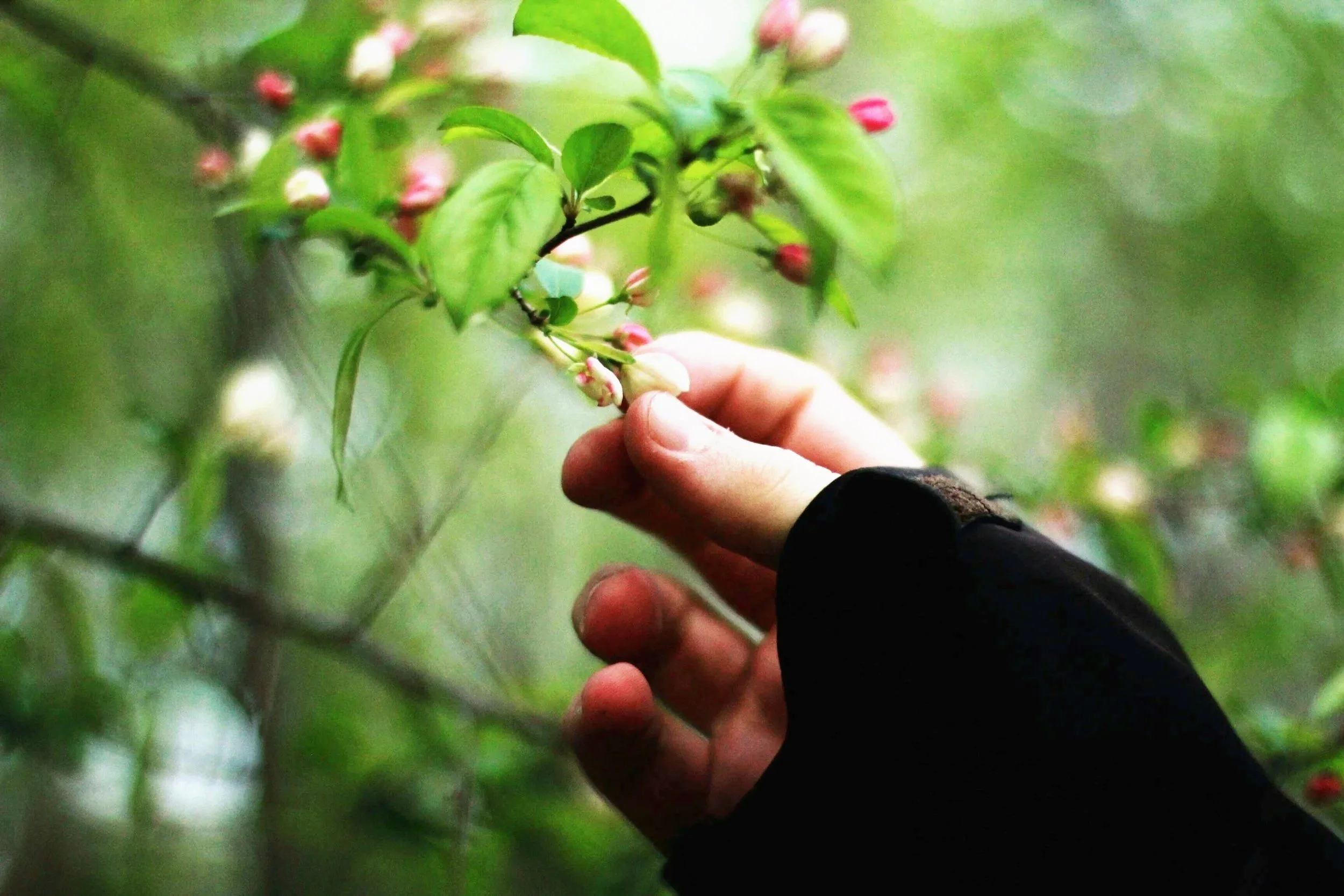
What Makes This Approach Distinctive
The sensory doorway: essence qualities perceived through all five senses — almost synaesthetically — where spaciousness might have a texture, clarity a temperature, aliveness a hum. The senses here aren't just a pathway to presence; they reveal something about the nature of being itself. This is what makes recognition embodied rather than conceptual.
The approach integrates with rather than replaces your existing modality. It meets people developmentally, where they are. And it emerges from my own lived journey — this isn't theory, but embodied wisdom.

Integration With Your Existing Modalities..
IFS therapists: Essence quality recognition gives precise language for Self's flavors — spaciousness, clarity, compassion — and invites noticing these qualities in how Self meets parts, and even in the parts themselves.
Somatic practitioners: This creates a bridge between sensation and awareness — a quality of softness in someone's shoulders isn't just muscular release, it's an essence quality revealing itself.
Meditation teachers: Move from 'be present' to specific recognition — what quality is arising in my awareness right now? Stillness? Aliveness? Spaciousness?
Spiritual directors: Offer embodied, sensory language for what's often kept abstract — the particular flavors of presence.
Developmental coaches: Support clients in recognizing how essence qualities mature through stages and inform their unique contribution.
Psychedelic-assisted therapists: Help clients stabilize and integrate the essence qualities often contacted during expanded states — giving precise, embodied language for experiences that might otherwise remain ineffable or fade.

Enhanced Capacity and Effectiveness
As you deepen your own recognition of and journey with essence qualities, you will notice how something shifts in how you meet life. Your presence becomes more attuned, your questions more precise, and your capacity to meet clients' complexity becomes more spacious. This isn't technique - it's transmission. When you're living from your own essence recognition, clients often sense it and naturally orient toward it themselves.
This is refined, embodied work that takes time to develop. But for practitioners ready to deepen their capacity, this offers a subtle refinement that can deepen how you support others in recognizing their own wholeness.

In conversation about the Essence-way, for practitioners..
-
Most presence-based work helps people become more present. That's foundational and necessary. Most contemplative traditions move beyond the senses toward pure awareness or witness consciousness. Most somatic approaches work beautifully with sensation but stay at that level. Essence quality recognition holds a distinctive place between these: it works through the senses, but toward the recognition of something that transcends ordinary sensory experience while remaining fully sensory. It takes a subtle next step: it asks what specific flavour does this awareness have right now?
Not just "I'm present," but "my awareness has a spacious quality". This distinction matters because when someone can name the sensory quality, something clicks - they're not just witnessing anymore, they're cultivating a deeper appreciation for awareness itself - and how that is also expressed in what is being seen. The knower and known collapse into direct recognition. Crucially, this recognition often happens before words - a felt sense, almost synaesthetic, that then finds its name. You're learning to hold that pregnant pause where sensing precedes naming. And critically, they name it - you're not imposing your perception. You're creating conditions where essence qualities become recognizable, and the client discovers their own language for what's intelligently alive.
-
Essence quality recognition isn't a replacement - it's a refinement that weaves through what you already do. If you're an IFS therapist, you're already helping people access Self-energy; this gives you precise language for Self's flavors - like spaciousness, clarity, compassion, aliveness. Instead of generic "Self-led," clients can name "Self has the quality of spaciousness”, they can also be invited to notice these qualities in nature or anything else they are drawn to.
For somatic practitioners, this focus creates a bridge between sensation and awareness - the softness in someone's shoulders isn't just muscular release, it's an essence quality revealing itself. Meditation teachers can move from "be with the breath" to "what quality is expressing through this breath? Spiritual directors can offer this more embodied sensory language for divine qualities. Developmental coaches can help clients see how essence qualities mature through stages. Whatever your modality, you're adding precision and poetry to recognition work that's likely already implicit in what you do.
-
This work actively prevents spiritual bypassing because it's rooted in the body, in sensory experience, in the here-and-now. You can't bypass your anger or grief when you're being asked to feel the texture of what's alive in your chest right now. The qualities are right there in the meeting. Essence quality recognition doesn't transcend the mess of being human - it holds tenderness with extraordinary Tenderness. Sometimes what's discovered is that even pain carries its own quality of fierce love.
The developmental piece is crucial: essence qualities aren't achievements. A child can know spaciousness to some degree. But how someone relates to essence matures through stages. At earlier stages, someone might use “clarity” for personal success. At integral stages, they understand this quality is an expression of essence — the ground from which all development unfolds. You'll meet clients where they are, recognizing the developmental intelligence expressing through whatever stage their essence recognition is at. This isn't leapfrogging stages - Essence provides the foundation from which natural development occurs.
-
This work isn't primarily about solving problems, but essence recognition has profound practical impact. In many ways it’s tapping into the “new mind” Einstein speaks of when he says “you can’t solve a problem with the same mind that created it.” When someone stabilizes in recognizing essence qualities as an expression of their Essence, their life naturally reorganizes - not from striving, but from wholeness. From this place, relationship and health take on a different quality. Someone recognizing spaciousness in the way they meet life finds their chronic anxiety loosens because spaciousness holds it with so much room the anxiety can find rest here. Someone recognizing the depth of themselves that meets with clarity makes decisions with more ease - not because they learned a technique, but because clarity itself is looking at the situation.
The key is this: essence recognition does help with real challenges, but as a byproduct of recognition, not as the goal. When the goal shifts from "get a better outcome" to "recognize what's alive," better outcomes often come - but from fullness rather than deficiency. Your role as practitioner is holding this paradox: honoring the real challenges clients face while supporting the recognition that transforms their relationship to those challenges. It's both/and, not either/or.
-
Essence work and shadow work aren't separate - they're intimately related. When someone touches softness as an essence quality, they're not bypassing their wounding. They're cultivating the essential softness that meets the survival ways. Our psychological defenses formed to protect our system from overwhelming experiences that couldn't be metabolized - the developing ego tries to compensate for a sense of lacking wholeness - so essence recognition and parts work naturally support each other.
Instead of only working with the wound, you're also strengthening recognition of what's never been wounded. From that stable ground, clients naturally turn toward their shadow, their parts, their trauma as they present - but with more capacity. You'll learn to work this edge: cultivating essence qualities (light awareness) while honoring the shadow work that's still needed. Some get caught in endless shadow work; essence recognition provides balance and meets that fixing protective part with spaciousness too. Some bypass into transcendence; embodied essence work grounds them. You'll develop sensitivity for when to invite essence recognition and when to focus on parts or trauma integration.
-
You don't need to be "enlightened" or have completed your journey, but there is a developmental threshold. You need to have tasted spaciousness, known clarity, felt aliveness - not just conceptually, but through your own nervous system and awareness, so that you can recognize when a client is touching that territory.
This is why practitioner companionship begins with your own embodied relationship with essence qualities. The technology of how to guide others emerges naturally from your own recognition. If you're operating from integral consciousness (what some frameworks call teal/turquoise, or second-tier), if you've done your shadow work and have a contemplative practice, if you're comfortable working at developmental edges - you're likely ready. The question isn't "Am I realized enough?" but "Am I willing to keep deepening my own recognition while I walk alongside others in theirs?"
-
If you or your clients are sensing something missing in manifestation work - a feeling that despite "doing it right," something isn't landing, or perhaps there’s a need for a deeper appreciation of what is working - either way essence quality recognition might be the missing piece. Most manifestation approaches work with soul desire: clarifying what you want, aligning with that vision, creating those conditions. This is valuable, creative work. But there's another level: essence desire - where essence recognizes and deepens its own qualities, where essence serves essence.
Here's the paradox: When people recognize and live from their essence, they often manifest what they thought they wanted - but from a completely different orientation. What you're teaching clients isn't wrong - but essence recognition can shift it from manifestation-as-striving to creation-as-overflow. When soul desire is informed by essence recognition, manifestation becomes an expression of fullness rather than an attempt to fill a lack. You might find this deepens your own work immensely, helping clients (and yourself) recognize the fullness that's already here - from which creative desire naturally emerges. It's not either/or but a dance between being and becoming, essence and expression.
How Practitioner Companionship Works..
This companionship is for practitioners who sense there's something here for them — perhaps a recognition, perhaps a curiosity about what this path could bring to their own life and their work with others. You don't need to arrive with everything already in place. You need only a willingness to begin with your own experience.

Supervision and Integration: As you begin working with clients this way, we work together on real situations - what's working, where you're stuck, what shadows are arising, how to hold the complexity. This is where theory becomes embodied practice.
Theoretical Frameworks: Unlike individual companionship, we'll engage developmental theory, contemplative maps, and psychological frameworks explicitly. You need this conceptual understanding to work skillfully across different modalities and client populations.
The companionship is offered in 6 or 12-month commitments, as this subtle capacity takes time to develop. While I hold the possibility of small cohort offerings in the future (4-6 practitioners learning together), currently practitioner companionship is offered individually to ensure the depth of attention this work requires.

Practitioner companionship follows the same basic structure as individual companionship - ongoing asynchronous exchange throughout the week, plus twice-monthly live sessions. However, the focus is different:
Your Own Deepening: We begin with your embodied relationship to essence qualities — you can't guide what you haven't recognized yourself. This alone can be profound for your own becoming. This might involve Inner Mentor work, Land of Plenty explorations, or simply learning to notice essence qualities in daily life and in how you meet your own challenges. This could be profound for your own becoming.
Learning the Technology: Once your own recognition is establishing, we explore how to create conditions for clients to recognize essence qualities themselves. This includes the questions you ask, the timing of invitations, how to avoid imposing your perception, and how to work with clients at different developmental stages.
Investment
For 1:1 Practitioner companionship, 12 months is standard
(I would on occasion offer 6-months for those with prior foundation)
I hold a maximum of 5 companionships at any time to ensure each person receives the quality of attention this work asks for.
Pricing follows a tiered structure with supported, standard, and sustained.
Supported pricing ensures accessibility
Standard pricing sustains the work
Sustained pricing helps make supported pricing possible.
Please choose the tier that honors your current capacity..
12 MONTH PRACTITIONER COMPANIONSHIP
Getting Started?
Step 1
Experience it yourself
Before committing to practitioner companionship, I strongly encourage you to:
Book an Essence-Way Taster Session to experience essence quality recognition firsthand. If you continue into companionship, this investment counts toward your total.
You might also consider an Individual Companionship for your own journey before exploring guiding others
Step 2
A discovery call
Once you've tasted the work, we can schedule a free 30-minute discovery call to explore:
Your current practice and how essence quality recognition might integrate
Whether the timing is right for practitioner companionship or perhaps you would like to focus on your journey first